How Much Should Your Pack Weigh?
Hiking practice
The whole concept of pack weight for your hiking adventures is one of those topics that has the potential for heated debated when you get a group of hikers together. Everyone will have an opinion but this question is like asking ‘how long is a piece of string’? Which is just a way of saying that the answer is impossible without more specific information.
In this article we look at the concept of pack weight and discuss considerations for determining what this means for you.
Why weigh your pack?
Firstly we need to consider the whole concept of weighing your pack. I mean how many other activities/sports do we even think about the weight of the equipment to the degree that we do in hiking? The key difference is that we carry the gear on our backs in a pack and this will have a physical impact on your body and as such we should minimise the impact as best we can.
How much weight should you carry?
The traditional school of thought on pack weight is that you should aim to carry no more than 20-25% of your body weight. This is very much an arbitrary figure but it does provide a starting point. This means that if you weigh 100kg your pack should be a maximum of 20-25kg. If your body weight is 50kg then your pack should be a maximum of 10-12.5kg.
As I get older I have found that I don’t heal or recover as quickly as I did when I was younger so I look for any opportunity to minimise the impact that the weight I carry has on my body. This should also be something that hikers of any age should look to do.
As a large male that weighs over 100kg my personal preference is to carry a maximum pack weight of 18.5kg and on very rare occasions when I need to carry two days of water, 21kg. While I’m physically capable of carrying more weight than 21kg, I’m there to enjoy myself so just don’t want to.
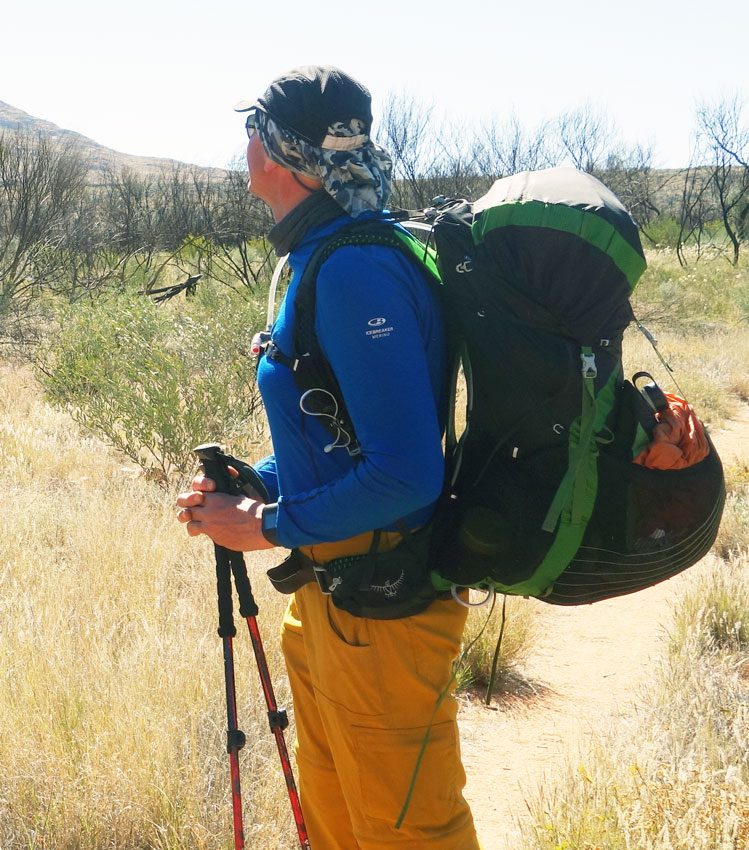
Tim with his loaded pack on the Larapinta Trail in 2016
Factors that impact pack weight
In looking at pack weight there are a number of factors that impact the weight we carry. These include:
The pack itself
Ideally before you purchase a pack you should be aware of how much weight/bulk you will be carrying. From the many hikers I see on-trail, the average pack size they tend to carry is a 65 litre capacity pack. What ends up happening is that whatever size pack you carry, you will fill it up.
There are a large range of brands and pack models in this range and but depending on how they are constructed, you will find models weighing less than 1kg and others with the same capacity that weigh around 2.5kg. The heavier packs will usually cater for larger carrying weights but if you don’t intend on carrying heavy loads, why carry a heavy pack?
Even when I’m doing multi-week long distance hikes and carrying around eight days of food, I will only ever carry a pack around 55 litres in capacity. Fully loaded with eight days of food, and 3 litres of water, this pack weighs around 18.5kg and my two lightweight packs cope with that quite well.
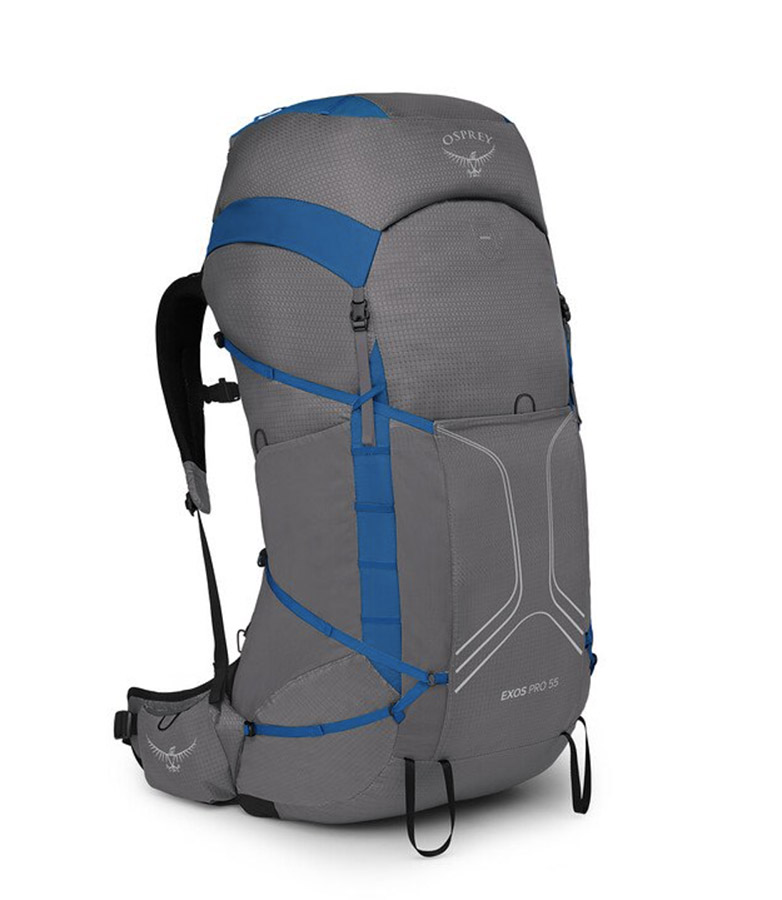
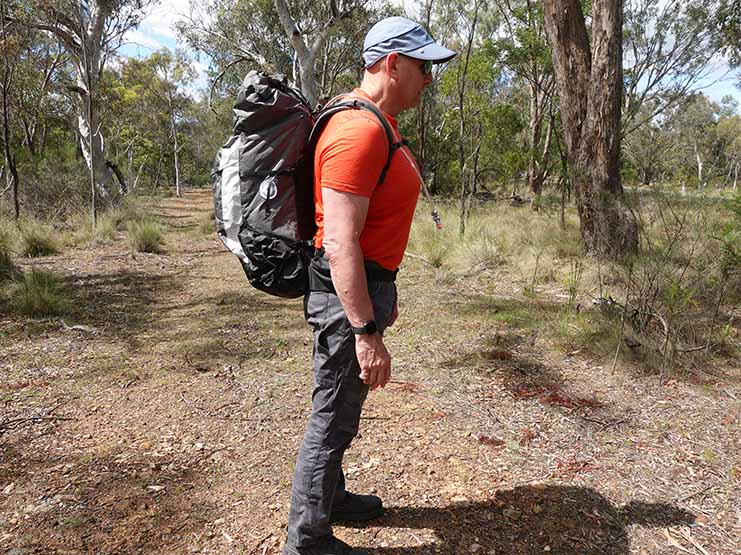
Tim wearing his Whippa Colo 55 Pack
The Rest of your gear
Everything piece of gear that you carry in your pack will add to the overall pack weight. Consider every piece of gear and if you need/want it thats fine. Be realistic about what you are going to use a piece of gear for and if you aren’t going to use it leave it at home.
If you are looking a replacing a price of gear think about what you are purchasing and why and choose the lightest weight option that suits your own specific needs.
Comfort on the trail versus comfort in camp
If you want to improve your comfort at camp you can carry luxuries such as a camp chair, pillow, additional changes of clothing, books etc. I have seen hikers carry 34kg of weight to cater for all their needs in camp.
If you want to improve your comfort in camp and on-trail then you will seek to minimise what you carry and reduce your weight as much as possible – this is where the concept of ultralight hiking (that is, carrying as little weight as you possibly can) comes in.
In reality most of us will sit somewhere in the middle of this spectrum.
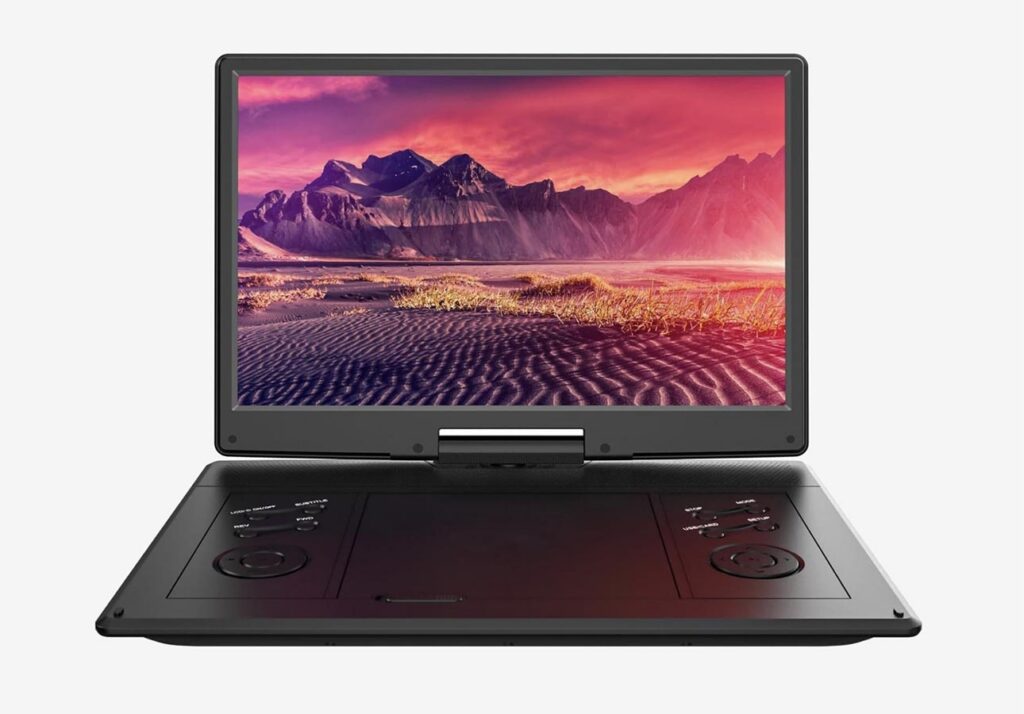
Portable DVD Player – and yes I have seen one of these used on-trail!
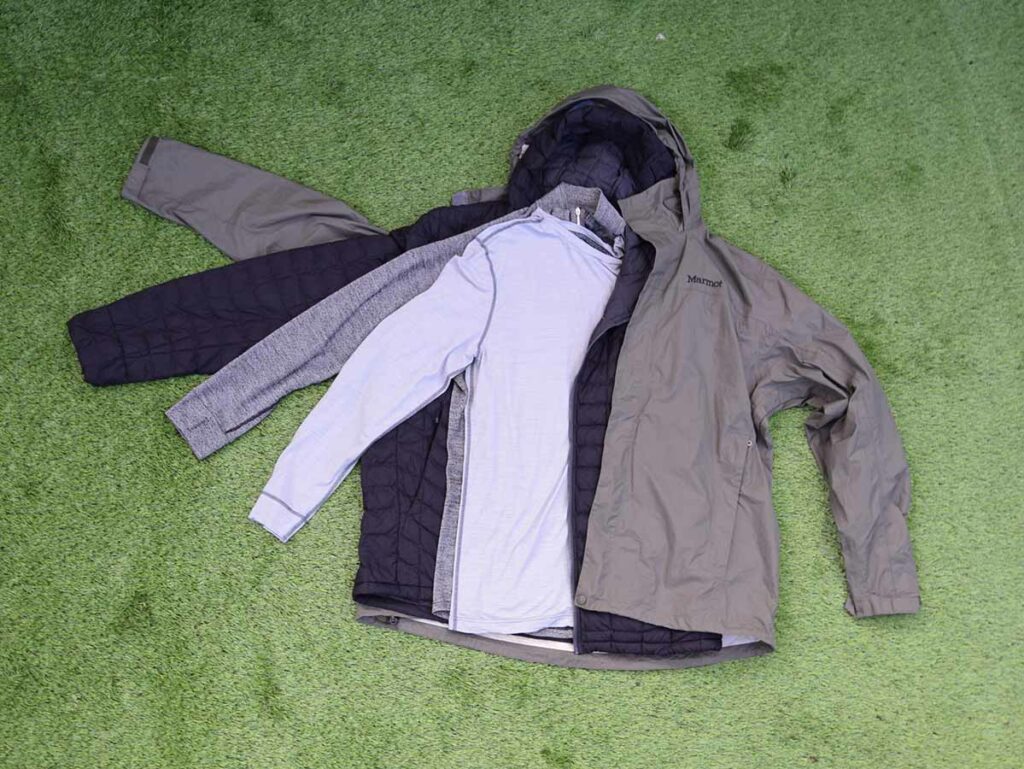
I will always layer my clothing and this consists of a 4 layer system
On extended hikes I will carry all the layers but on shorter hikes when I have a high degree of confidence in the weather, I may lose some of these layers
Clothing
Take it as a given that you are going to smell on-trail so trying to minimise this by carrying multiple changes of clothing just doesn’t work. I have started a day of hiking in freshly laundered clothing and within 30 minutes I ‘stank’ due to the exertion and the hot weather. This is a bit of a learning curve for hikers and while I usually work with three pairs of socks for my longer hikes, I strip back the amount of clothing I carry and this works for me.
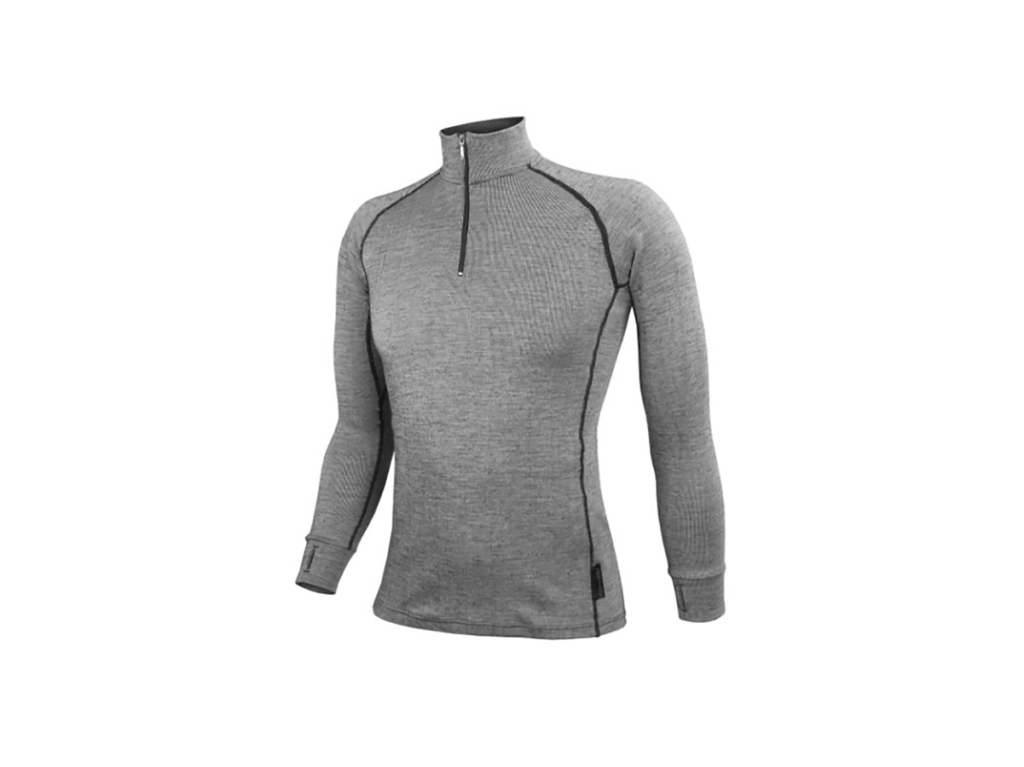
Wilderness Wear Mens MerinoFusion 190 Long Sleeve Zip Neck Top
This is one of the tops I wear for my hiking adventures. More often than not it stays in my pack and strangely enough is the last layer I put on when it gets really cold weather
Seasonal weather
If you hike in snow conditions you will carry more weight than say someone hiking in hot conditions. Your sleeping bag, your clothing, will all be heavier in the cold weather. In 2018 when I hiked the Bibbulmun Track I had rain on 27 days out of my 35 days on-trail. Now some days it was only for a short period and on other days I had cyclonic conditions but on that hike I definitely needed to cater for wet weather.
If you know what to expect with a high degree of confidence, you can skip carrying a down jacket, wet weather gear, or a winter sleeping bag. If the conditions are variable, you are best off catering for the worst possible conditions just to be on the safe side.
Gender
As a generalisation women feel the cold more than men do. What this means is that a woman will often carry a heavier grade of sleeping bag (my wife Gill does), and will often wear more layers that men do. In addition if a male and a female are carrying identical capacity packs, quite often the reduction in weight isn’t a big a percentage for women even though they may be have a smaller frame size.
A good example of this is that when we started to seriously reduce our pack weight a number of years ago, we both reduced the weight we were carrying by around 32%. Even though we were carrying very similar gear (I have the additional weight penalty of blogging electronics e.g. camera, iPad etc) but I ended up carrying around 14% of my bodyweight for most trips with Gill carrying 16% of her bodyweight. This discrepancy in pack weight was mainly attributed to our individual cold tolerances, which means that Gill tends to carry warmer, but heavier gear than I do.
Water
This is a bit of a tricky one. Put simply 1 litre of water weighs approximately 1kg. So why carry more than 1 litre? Isn’t it just better to top up as you go? If you are hiking in conditions where water is plentiful and guaranteed, you can top up regularly and carry smaller amounts of water.
If however water availability is not guaranteed or you just don’t know, you are better off carrying water for the day. In my case in cooler weather I use around 1 litre of water for every 10km travelled. In hot weather I will use 1 litre of water an hour! That’s a big difference depending on the terrain. A number of year ago I walked from Kiandra to Canberra and in an area that I knew very well. I made assumptions based on multiple years of personal experience given I knew the area very but well miscalculated on water availability.
I also prefer to use a water bladder finding that I will drink more water when I can reach for the water tube located near my mouth taking small sips as I need rather than having to access a water bottle on the side of my pack. If I want to carry less water, I just don’t fill the bladder up as much.

Osprey Hydraulics 3 Litre Hydration Bladder
Food
In my case food is the biggest variable to how much bulk/weight I carry in my pack. After more than ten years of experimenting with what I eat and what I carry on a hike, I have now settled on carrying 612 grams (1.35 pounds) dry weight of food per day that provides around 2900 calories. It’s worth noting on my biggest days of hiking I burn up to 8000 calories. Even on an average day I burn more than 3500 calories, and typically more, so I just accept I will lose weight on a long distance hike.
I can’t stress enough here that the only food worth carrying is the food you enjoy but when was the last time you actually put thought into what you carry and what you bring home with you?
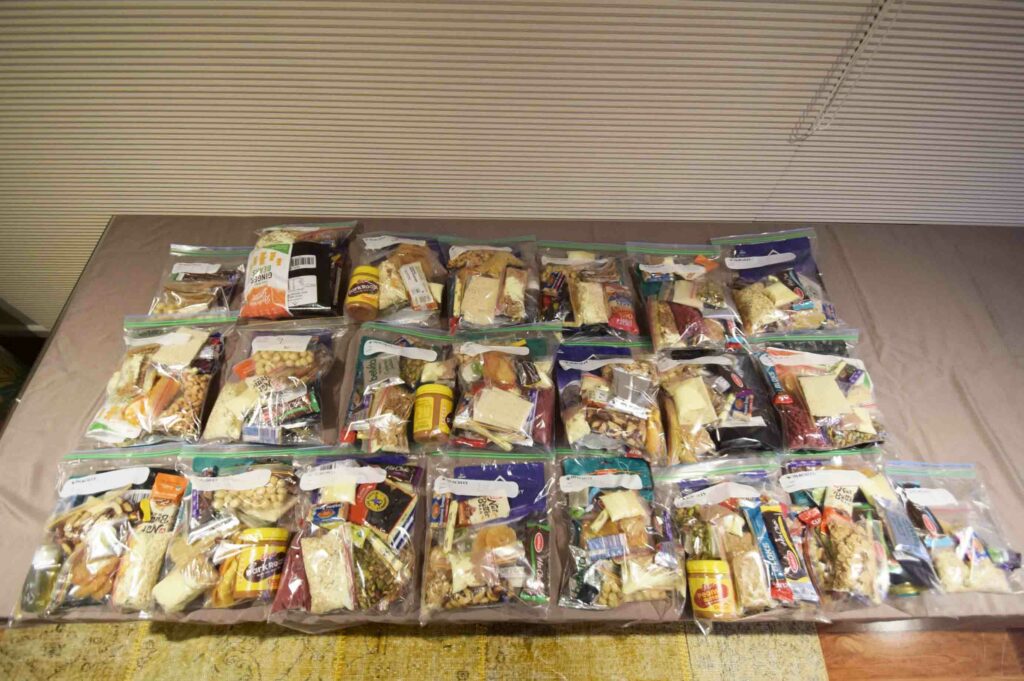
21 days of food for a long distance hike, packed by day
How to weigh your pack
There are many options to weigh your pack and how technical you get will depend on how you do it. The simplest way is to weigh yourself on your bathroom scales without your pack and then with your pack. This will give you a good indication but not the fine detail.
If you are a real gram weeny then having more finely tuned scales are well worth it. I will use my kitchen scales for most of my smaller stuff, I also own a couple of luggage scales which are reasonably inexpensive and worth it if you travel by plane on a regular basis, and then for the really fine items I also have a set of digital mini scales ‘just because’ which weigh in increments of 0.01 grams for the really lightweight stuff.
I would strongly suggest having a set of luggage scales as they will be a big help in determining your pack weight and won’t set you back financially.
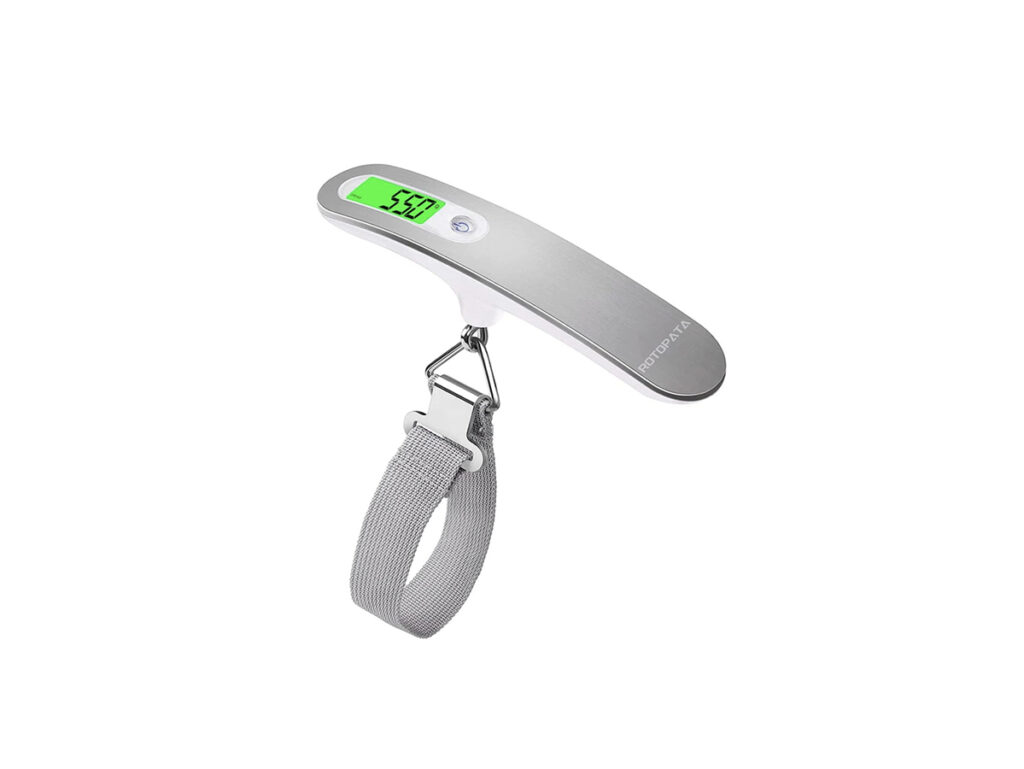
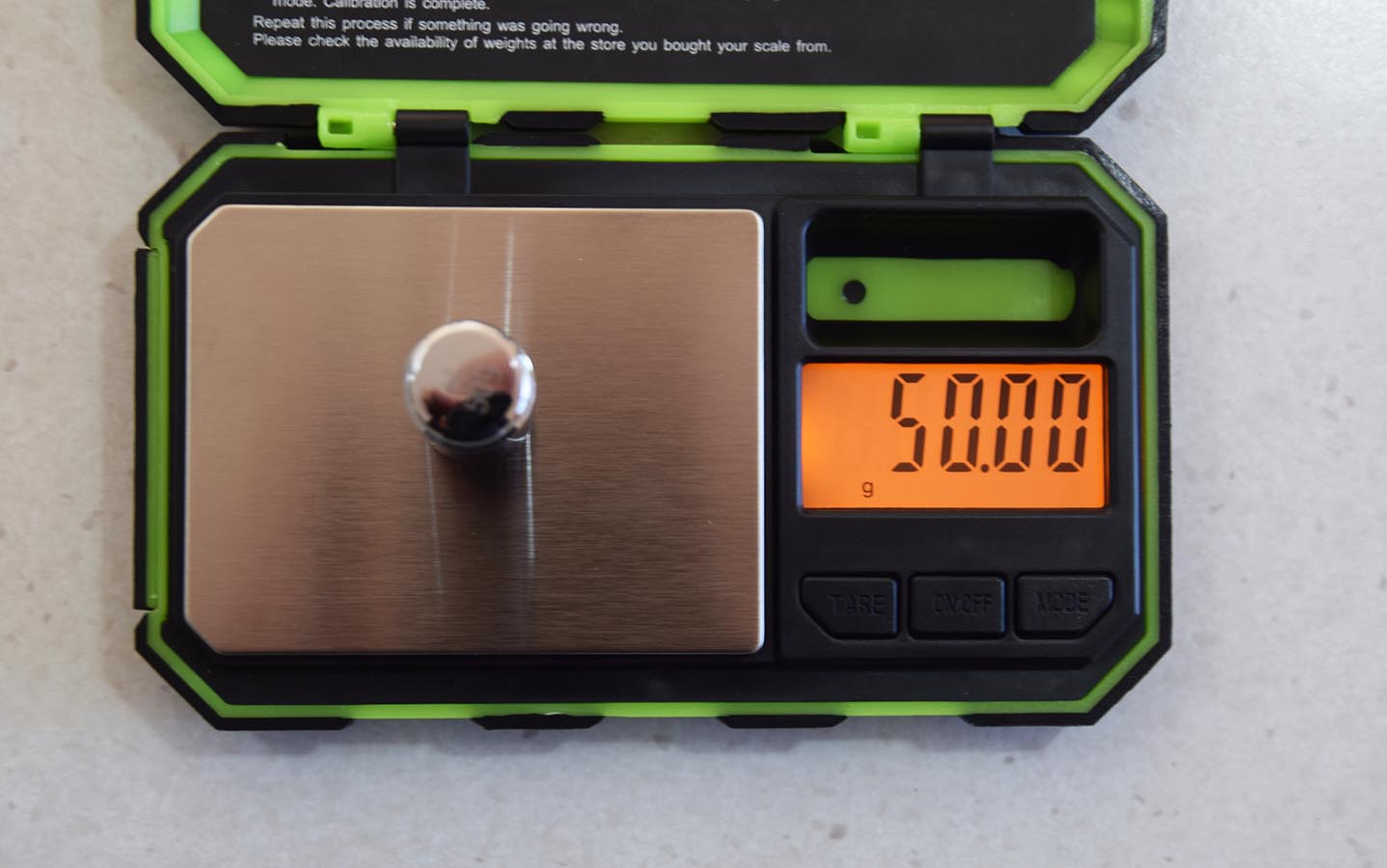
Mini scales with 50 gram test weight
Reassess
Pack weight should be something that is flexible and every trip is different because of climate, terrain, and your fitness which all vary from year to year. I use a spreadsheet that sets out every piece of gear that includes weight but once packed, I will then weigh my pack to confirm the total weight I’m carrying.
Final Thoughts
So to answer the question ‘how much should your pack weight?’ There really is no one definitive response. What I would say is that unless you have a very specific need, keep your pack weight below 20% of your body weight but carry what you need and want, and look at ways to minimise what you carry so you carry as little weight as you possibly can.
And last but not least, don’t carry what you did on your last trip just because it worked for you then. What you need will vary from trip to trip – its your pack and your experience (remember, hike your own hike), so don’t carry things you haven’t put conscious thought into.
Published / Last updated
16 February 2026