Hats for Hiking
Head Protection
Australia is a country of sun lovers; if we aren’t at the beach, we’re out bush, if we aren’t out bush, we are usually outside doing something if the weather is warm. As I write this article we are in the middle of a heatwave over much of Australia and with that some intense UV so I’m spending my time indoors, planning for upcoming hikes and writing articles like this one. If however the conditions are with you and you are getting outside hiking, then you need to put some thought into sun protection, with head protection being on the top of the list.
I own a number of different types of headwear including various hats, buffs, and beanies, and they all have pros and cons. Having said that I do wear all of them for different conditions and for different reasons. With so many options to choose from, what should you be looking for?
Broad Brimmed Hats
When I say broad brimmed hat many people will think of Akubra style hats and while they will do the job they are hard to pack, easily damaged, and prone to being blown off in the wind.
Enter a hiking style broad brimmed hat. These hats usually have a deep front and side brim and then convert to a sun protecting flap on the rear. Broad brimmed hiking hats will usually have chin straps to keep the hat in place in windy conditions. Higher end versions will also have features like strategically placed vents to allow a bit of airflow around your head. I don’t always have my chin strap under my chin and cinched up but as soon as the wind comes up it comes into play.
The advantage of this style of hat is that the rear cape is held away from the head unlike the cape on a peaked cap which allows better airflow and so you won’t feel as clammy.
The other bonus with hiking style wide brimmed hats is that they are made from robust lighter weight material that folds easily into a pack or bag so there is less chance of crushing the hat.

Sunday Afternoons Ultra Adventure Hat my hat of choice in hotter weather
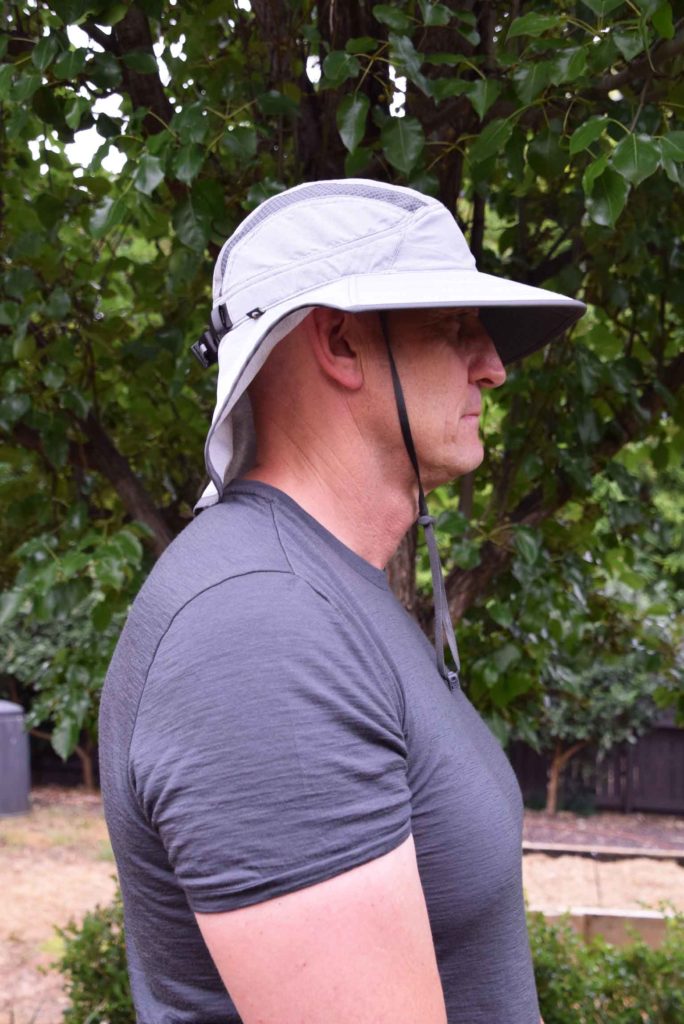
Sunday Afternoons Ultra Adventure Hat side view showing the brim and the ‘cape’ at the back for neck protection. The chin strap is loose which is how I wear it when it’s not windy
Peaked Caps
Peaked caps are a mainstay for many Australians and for many hikers. While they provide good protection from sun glare at the front, they do little to protect you on other sides of your head and neck. You can however, remedy if they are combined with an attached cape of some sort.
I will usually wear a peaked cap in cooler weather conditions and avoid wearing them at high altitude to avoid the higher UV levels.
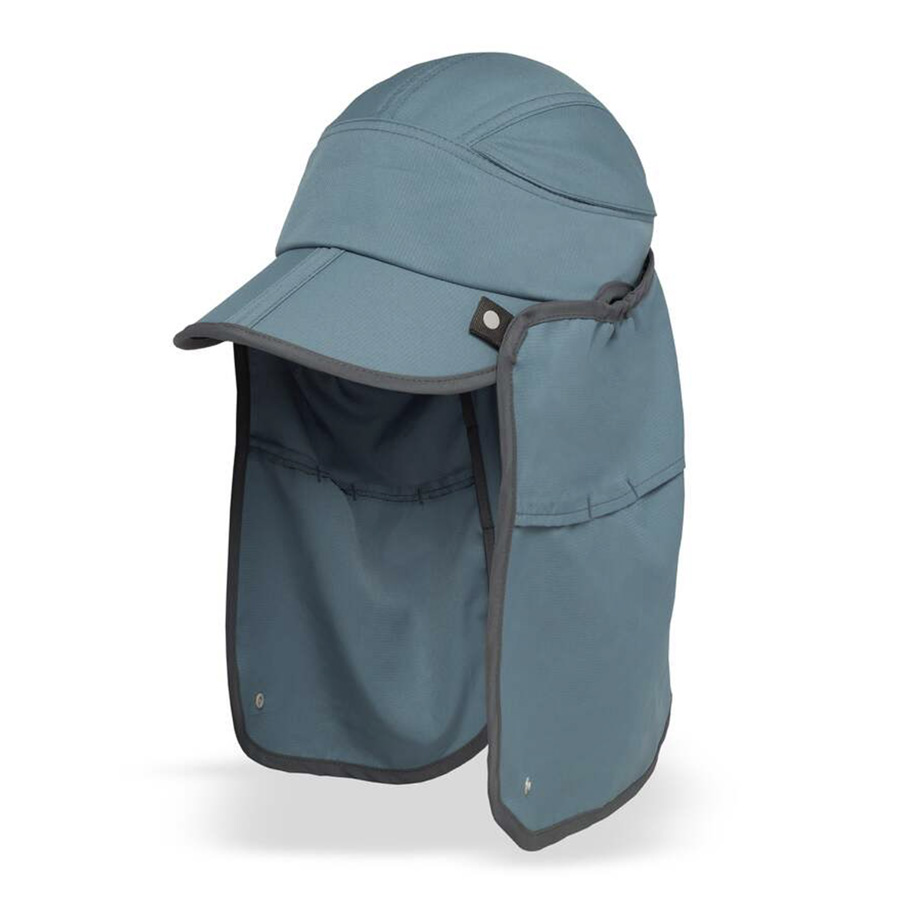
Sunday Afternoons Guide Hat with the protective cape attached to provide sun/UV protection at the side and rear. This is the cap that I wear in cooler and low UV conditions. This one has a press stud system on the attached cape that acts as a chin strap in windy conditions
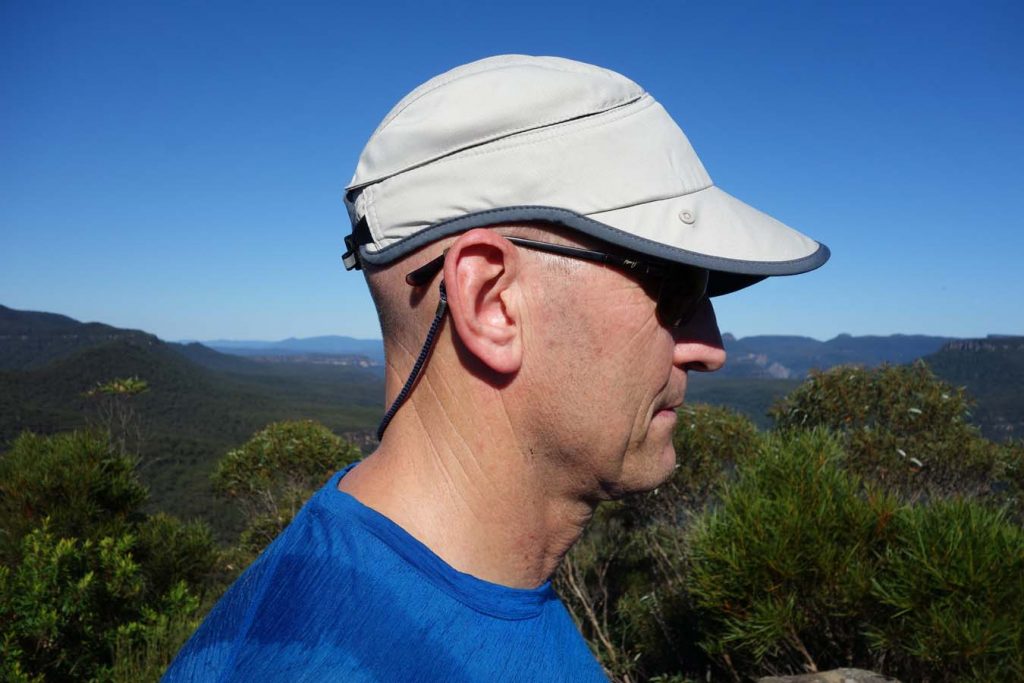
Sunday Afternoons Guide Hat without the cape. In this image you can see the shading to the eyes but no protection to the side and rear of the head

In this image you can see the sunburn including the small hole in the back of the cap. This image was taken in January a few years ago in the Australian Alps and while the temperature was only 18 degrees Celcius, the UV at that altitude is very high. I should have known better and either worn the attachable cape or worn a broad brimmed hat to protect my neck and the side of the head – I ended up paying the price instead! I definitely chose the wrong hat on that day
Buffs
Buffs for me are also a perfect piece of equipment, they really are multi purpose. I will always carry at least one buff on every hike and when it’s really cold a second one as well. During really hot conditions I will often wear my buff in conjunction with a peaked cap to provide that extra sun protection which is crucial to those of us who are ‘follicle-y’ challenged (i.e. bald). If you’re hiking in really dusty conditions it makes a great dust mask. If it is really hot, you can soak the Buff in water and it will help cool you down around your neck or if worn over your head. You can also use it as a water filter to get rid of the chunky bits before sterilising your water!
There are so many ways you can wear a buff and particularly when combined with peaked cap, can provide a high level of sun protection.
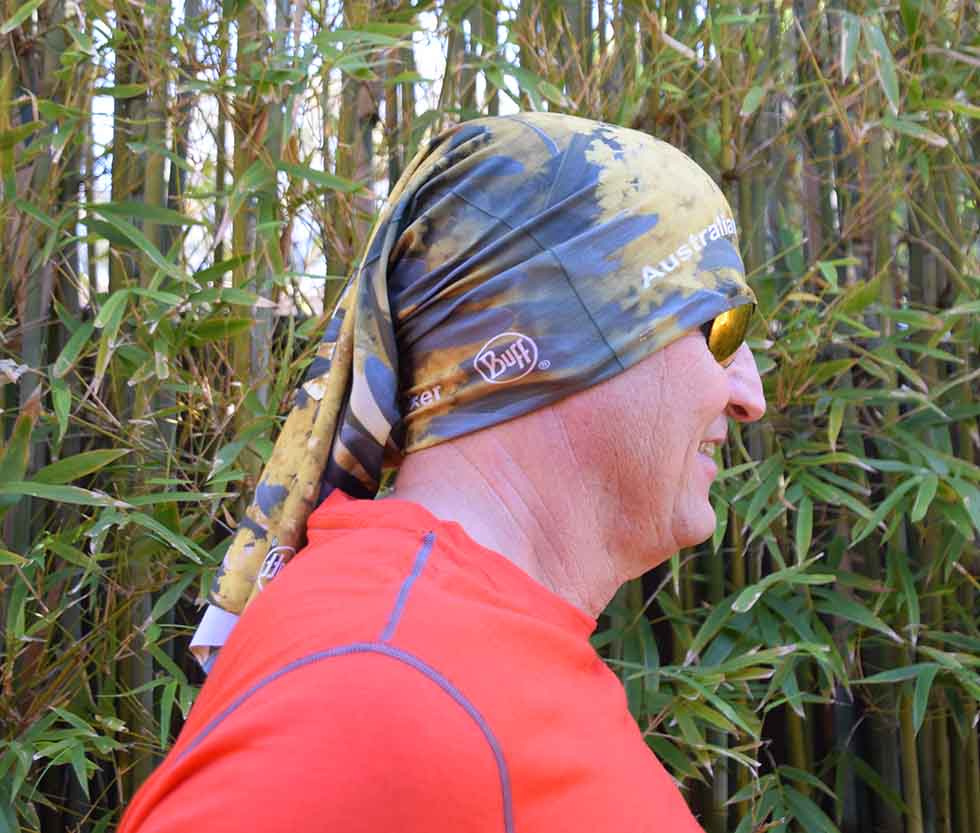
Tim wearing the Australian Hiker Wattle Buff side view. The tail of the buff is providing reasonable protection to the back of my neck
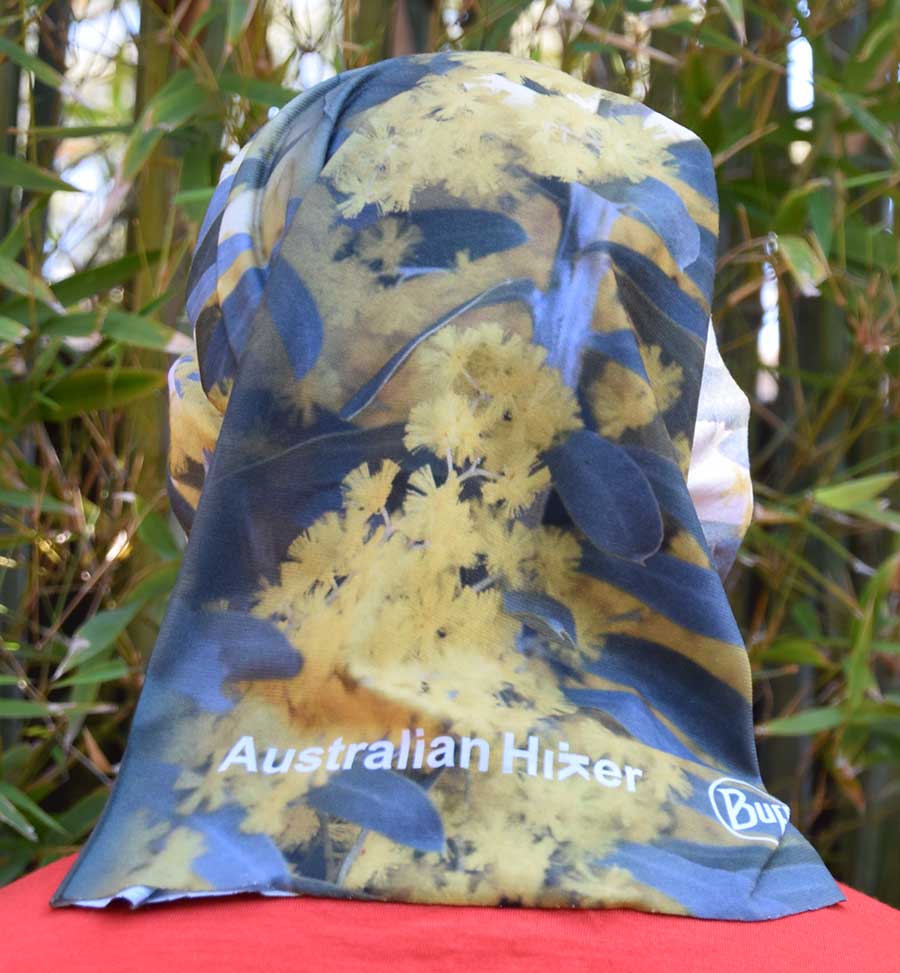
Tim with Australian Hiker Wattle Buff close up

In this image Tim is wearing a peaked cap and a buff. There is also a second buff around his neck to prevent sunburn. This image was taken in Switzerland in the Alpine region which had high levels of UV
Beanies
Beanies are generally considered a cooler weather option and most hikers will wear one to keep their head warm and protect the top of the head from the sun. As such they don’t provide a lot of protection for the face and neck – this includes sun glare which if you spend much time in the snow regions, is taken care of by a decent pair of sunglasses.
In my case I will wear a beanie on shorter hikes of just a few days particularly when the sun isn’t going to be an issue.

Wilderness Wear MerinoFusion Light 160 Skull Cap side view. Beanies provide no glare protection which can be addressed by combining with sunglasses and a jacket or collared top.
The Wind!
Wind, the enemy of hats! If you hike above the tree line in the Australian Alps or are hiking on exposed seaside cliffs, you definitely want a beanie that essentially clings to your head (cooler weather) or a hat that has a chin strap. All the hats I wear have a chins trap but at least once a year I get caught off guard by an unexpected gust of wind and end up chasing my hat along the trail, sometimes for 20-30 metres. That’s not something you want to try if you’re traversing a cliff edge!

Hat chin strap done up to hold the hat in place when it’s windy

Split rim on my Sunday Afternoons Ultra Adventure Hat. This split means that rather than the brim being pushed up, or down in strong winds each side of the hat act independently.
Final Thoughts
Headwear of some type is an essential piece of equipment for hiking and if you are like me, you will have your favourite that you will gravitate towards. In reality, what you wear on your head should take into account UV levels and sun protection to suit the hiking conditions. I wear each of the types of headwear I have identified above at various stages throughout the year based on the forecast conditions. I will always carry a buff, whatever my hike, but the hat/beanies change. If I’m going on a multi-week hike I will always combine a broad brimmed hat with at least one buff and if it’s a winter hike, I’ll add in a second one.
When was the last time you put some consideration into what you put on your head? If it has been a while, take stock and see if what you’re wearing is fit for purpose or could be improved.
Last Updated
26 January 2026