2026 Heysen Trail
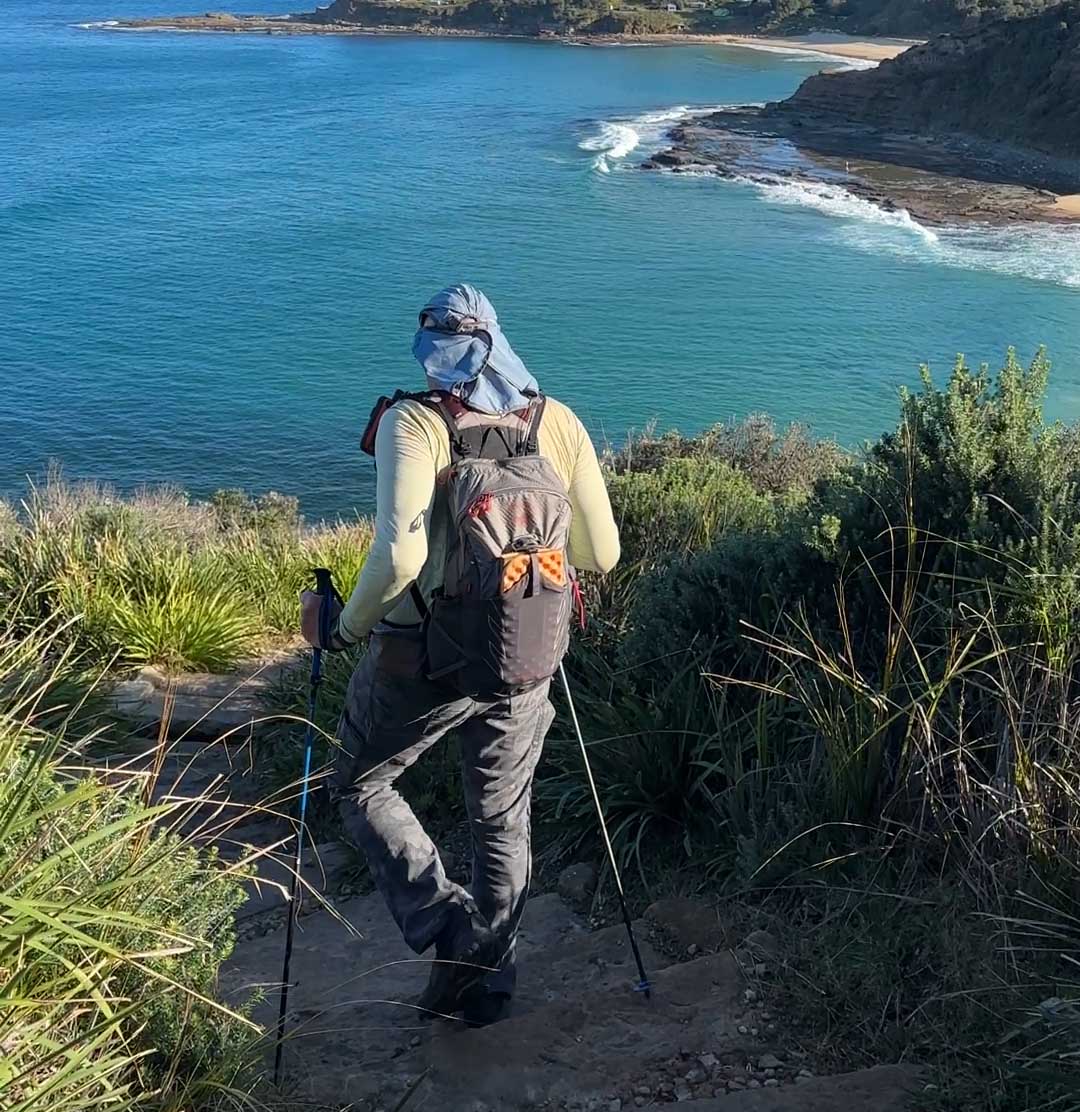 Fitness Training, Tim walking down a steep hill
Next Post
It doesn’t take long for hikers to realise how important footwear is to hiking and while I put a lot of thought and consideration into every piece of gear I choose to take on a long distance hike, without a doubt I put the most effort into choosing my footwear. Once I find footwear that I’m happy with I will stick with them until the company manufacturing them replaces them with a different model or I find something better.
- First and foremost fit and comfort come above all else!
- Durability. While durability is the second consideration after fit and comfort I try to go for a shoe that will provide me with as much use as I can. In the past I have used supremely comfortable footwear that has only last 450km!
- Easy to purchase. I want to be able to get a replacement pair of shoes quickly and easily and as the proud owner of size 15US feet this will often mean online purchasing as most stores typically don’t carry these in stock.
- If necessary can I wear my chosen footwear with heavy duty gaiters?
- Appearance, including colour. Purely a vanity consideration, but hey I like to feel good when wearing any piece of clothing.
Over the past few years I have gravitated toward the Topo Athletic Brand as they make shoes in my size and I can source them online in a reasonably quick manner. In addition every pair of Topo’s that I have owned, and it’s been a few over the years, has lasted me around 1200km of on trail use.
My current shoe of choice is the Topo Athletic Vista which is one of their newer models in the range. The pair pictured in this post turned up a few weeks ago ready for the Heysen Trail in late July, and are the third pair of this model I have used. Pair one lasted me 1200km, pair two which I started wearing for the Great South West Walk earlier this year are still in use and have about 500km on them and are still going strong.
These are a heavily cushioned shoes with a 5mm drop that as is the case with other Topo models has a wide toe box. While I wont be using heavy duty gaiters on the Heysen Trail the Vistas can cope with them as Topo provides a narrow gap in the sole tread to allow for the gaiter strap to fit. These trail runners can also be worn straight out of the box and I’ve always found that with Topo’s there isn’t a need to wear them in. This new pair will go into use at the start of the Heysen Trail and given that this trail is around 1200km in length this pair will last me for the entire trip.
Next Post
Amongst the many decisions I needed to make in walking the 1200 km Heysen Trail is the direction of travel. There are so many reasons for starting either direction. From a planning perspective this choice influences just about every other decision you make including camping locations, food drops, transport and even distances travelled per day. Do I start on the coast which is relatively flatfish at the southern end, has more access to towns and facilities, and in most cases shorter distances between campsites or do I start at the northern trailhead in the arid north and head south?
I previously published an article on choosing travel direction called Walking Home: a creature of habit where I outlined my reasons for choosing the travel direction on a hike; in my case I am definitely a creature of habit. In regard to this upcoming trip I’ll be starting at the northern trailhead in Parachilna and heading in a southerly direction.
I have two key reasons for this decision. First and foremost walking towards home. On this walk there really is no such thing. Gill has offered to meet me at the end of the walk and we will be driving back to Canberra rather than getting a flight. For her meeting me at the southern trailhead will be a much easier option.
Secondly, from a transport perspective getting the bus service to Parachilna after flying into Adelaide, and then heading south means that if I arrive at the southern trailhead early or late it doesn’t create and issues nor mean I would have to wait for a bus service. So southward it is!
- Heysen Trail map set and compass
- I have purchased the updated map set which I will be using for planning and something that I will use at the start of each map section to familiarise myself with what’s coming. I will end up using roughly around 1 maps per week and when I get into town I will send the used maps back home. I always carry a compass as a ‘just in case’ but have never needed to use it to navigate back onto trail.
- Far out Guide Phone App
- For me this is my main form of navigation. It works without a phone signal. However the GPS usage on the phone sucks through the battery so I usually use this app without the GPS only turning that feature on when I have a doubt about my location or want an accurate distance to my next destination. If you are a long distance hiker then the Far Out app is a ‘must have’ – it just makes life so much easier.
- GPS
- I will have a set of GPX maps loaded onto my GPS and again this is an option I tend not use on the trail but its great as a ‘just in case’.
As Australian long distance trails go the Heysen Trail is just that little bit different. While other trails will very strongly recommend you don’t hike in mid summer doing everything they can to deter you from walking but at the same time the trails stay open. Not so the Heysen Trail which typically shuts off sections around mid November and reopens them around May all based around fire risk. This means you have a defined window if you wish to do an end-to-end thru hike.
When doing a long distance hike like the Heysen Trail, checking weather records for a few locations along the length of the trail is just one of the tasks. While many hikers prefer warmer conditions for their hiking adventures I will start my thru hike on 22 July 2026 based around the temperatures at the northern trailhead. Over the 8 week duration of the hike the maximum temperatures are expected to range between 15-21° Celcius and a minimum of around 4-10° Celcius. I’m sure there will be some outlying days but I’m very happy with the averages. I also find that I sleep better in cooler temperatures and given the expected minimums will opt for a more compact, lighter weight sleeping bag.
Rainfall wise I will expect at least some rain on this hike but given the period I’m going the northern section of the trail only averages around 16mm a month so I can’t complain about that.
So July it is!
As Australian long distance trails go the Heysen Trail is just that little bit different. While other trails will very strongly recommend you don’t hike in mid summer doing everything they can to deter you from walking but at the same time the trails stay open. Not so the Heysen Trail which typically shuts off […]