Condensation and Hiking
Hiking Practice
Condensation forms when water vapour in the air cools down and turns back into liquid water droplets, typically on a solid surface. From a household perspective most people will have seen this occur when putting very cold water into a warm glass, or moisture forming on the inside of windows, particularly in the colder months when the temperature outside of the windows is cold and the inside temperature is warm.
In hiking the impact of condensation varies from being almost non existent to being a major inconvenience. For condensation to occur there needs to specific factors that coincide for it to be an issue. This article discusses the causes of condensation, how it can impact your hiking experience, and more importantly how to prevent or reduce its impacts.
How does condensation occur?
By far the biggest impact that condensation has on hikers relates to the time you spend in your tent. The average person, will lose approximately 500-600 ml of water overnight which is made up of around 300-400 ml as you breathe, as well as another 100-200 ml through your skin, and that’s without sweating.
Your bodies also give off heat and this is why it typically feels warmer inside your tent than it does outside. All this helps to create a temperature difference between the inside and the outside of your tent that enables condensation to form typically on the first solid surface which is usually the tent fly (e.g. the outer layer) of a two layer, 3-season tent, or in the case of a two layer, 4-season tent, the tent inner where the layer is usually solid.
So for condensation to occur, and for it to be a problem, you need moisture, a temperature difference between the inside and outside of your tent, a solid surface for the water to hit and condense into water droplets, and minimal airflow.
How does condensation impact hikers?
A few droplets isn’t going to be an issue and its not unusual to get the odd drop of water hit you on your face during the night. Again, this occurs given the moisture leaving your body is coming from your face as you breath out or the air venting from the top of your sleeping bag and given the moisture is often concentrated around the head end of the tent. Once you have tow people in a relatively small tent, or you are in a very wet environment, the degree of moisture can become quite large and can end up wetting both you and your gear, in particular your sleeping bag.
Factors that influence condensation
The key factors that impact condensation forming inside your tent are:
- Moisture loss through breathing and through your skin
- Environmental moisture created by high humidity, which includes camping near larger lakes and rivers. Keep in mind that the recommendations for camping near water varies from state to state but is aimed at ensuring you don’t contaminate the water bodies or get caught out in a flash flood
- Single skin tents are more prone to condensation issues. This doesn’t mean that you shouldn’t buy a single skin tent but rather you need to keep this in mind as a factor when choosing one that is large enough so your feet and head aren’t jammed up against the end of the tent which will often result in the footbox of your sleeping bag as well as your head getting wet
- Lack of ventilation points in tents. Even double skin 4-season tents should have the ability for ventilation to minimise condensation
- Poor tent set up that doesn’t provide a gap between your tent inner and the tent fly
- Having wet, as opposed to damp, clothing or footwear in your tent
- Excess moisture that is left inside the tent for the next night
- It best to dry off the tent as best as possible before you head off for the day, if necessary hang your tent on a bush when you stop for lunch, and put up your tent while its still daylight with the doors open to help dry off the last of the moisture.

My tent at Moleside Campsite on the Great South West Walk. This was the designated campground and I was camped about 25 meters away from the river and approximately about 6-8 metres above the Glenelg River. This is the largest river that I have ever camped near – you could feel the temperature and moisture difference once the sun went down. My tent fly was sopping wet in the morning as expected
Minimising condensation
Totally preventing condensation is almost impossible and is at the whims of the environment that you are in. If you are hiking in warmer climates, ensure the wind is blowing across the tent to lower the humidity and set up away from water bodies so condensation is unlikely to be an issue. But if the weather conditions are against you, then every little bit you can do will help.
The following are things that you can do to minimise condensation:
Tent site selection
For a number of reasons tent site selection is so important for a good night sleep and this includes minimising condensation. When choosing a tent site from a condensation perspective, consider the following:
- Camp away from large water bodies including lakes and rivers
- When camping near large water bodies the night time temperature is much colder (which isn’t a bad thing in summer) but the moisture in the air is much higher and as such, condensation can be much worse
- If you are camping near a large water body (because that’s the designated campsite) camp higher up to reduce the impact
- Try to find some overhead vegetation as this will help to create a microclimate that will keep the air around your tent warmer and help reduce condensation. Please keep in mind that you don’t want to camp under large branches (widow-makers)
- Set up your tent where it will get early morning sun which will help dry off the moisture on the tent fly before you start your days hike.
Gear Selection
- The ultralight concept has become entrenched in hiking and with that very lightweight single skin tents. The down side of single skin tents is that the condensation forms direction inside your tent and as soon as you brush the inside of the tent water will start flowing down into the base of the tent. When selecting a single skin tent choose one that allows space around you and your gear rather than going so small your head and feet are jammed up against the tent ends
- With a typical 3-season double skin tent, the condensation will usually form on the fly of the tent and not the tent inner.
- If you are purchasing a 4-season tent (winter) then make sure that the tent has some form of venting to allow excessive moisture to exit the tent.
Wipe!
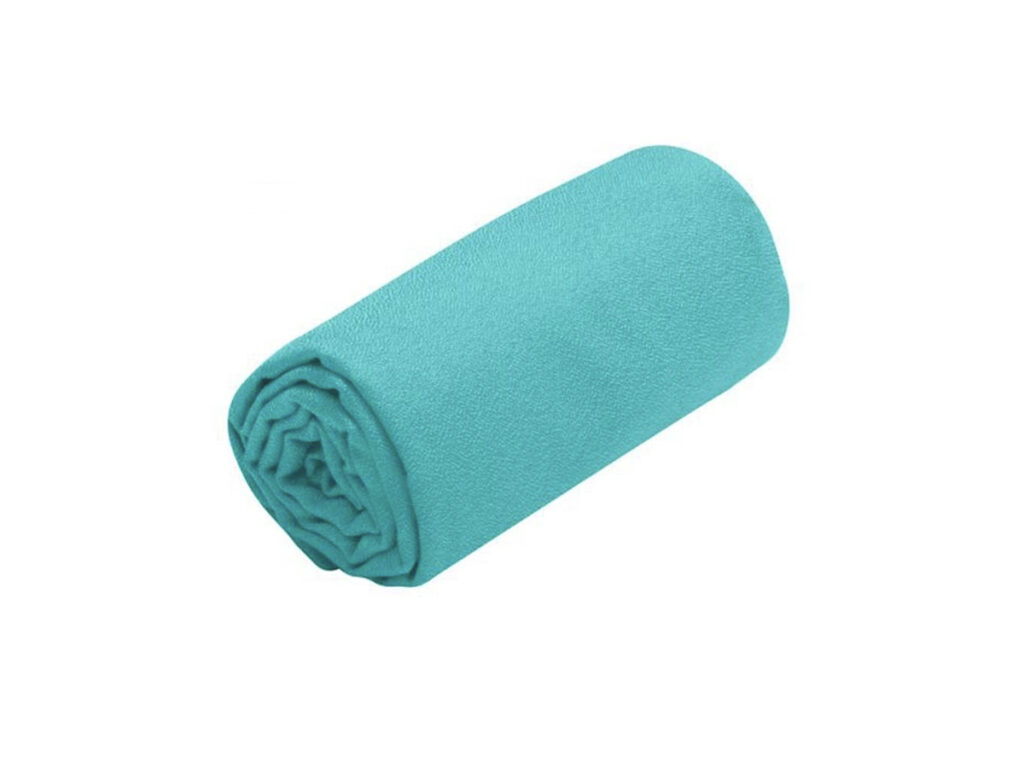
- If you have excess condensation building up on the walls of your tent then use a Microfibre Towel or a ‘Chux’ to get rid of any excess moisture inside your tent. These little items can also be used to wipe any excessive moisture off the outside of your tent if you plan on starting your hiking early in the day when your tent hasn’t had a chance to dry off.
Final Thoughts
You could be forgiven for thinking that condensation issues are something that only inexperienced hikers have to deal with but it can impact anyone even if you’re a hiker with 30 years experience that generally camps in warm, dry climates. Generally, condensation impacts hikers when they camp in wet/moist conditions.
If you’ve never had to deal with condensation before, the first time you may even think that there is a leak in your tent but these days that’s a rarity unless you have an old tents that’s on its last legs.
In my case the only times I have issues with condensation is when I camp near rivers and lakes such as on the Great South West Walk or the Hume and Hovell Track. Given that I try to get away early it means that in most cases I pack my tent fly into the outer stretch pocket of my pack in a sopping wet condition. I take this into account as a hike and will hang my tent fly up at lunchtime to help dry the tent off and I always try to set up my tent while it is still sunny enough to help dry out any moisture that’s still left on the tent.
The other key factor is to always take the time to properly set up your tent and ensure the guy lines are all taught to keep your tent inner and tent fly from touching each other.
Keep in mind that you will never fully keep condensation from forming but you can certainly go a long way to minimising the impact and keeping your tent and gear as dry as you possible.
Last Updated
8 September 2026